
How hot are you?
Classic poolside dining for when you can't stand the kitchen.
Sometimes old familiar solutions are the answer when you can’t stand the thought of even turning the lights on in your kitchen. If you’d rather float on your back in the pool than cook, there are lots of great recipes that don’t require a stove or oven, and are super healthy low-calorie meals. My favorite is the watermelon salad. Ok, I know this is nothing new. Just a reminder that the simple things are usually best when you’re conserving your cool.
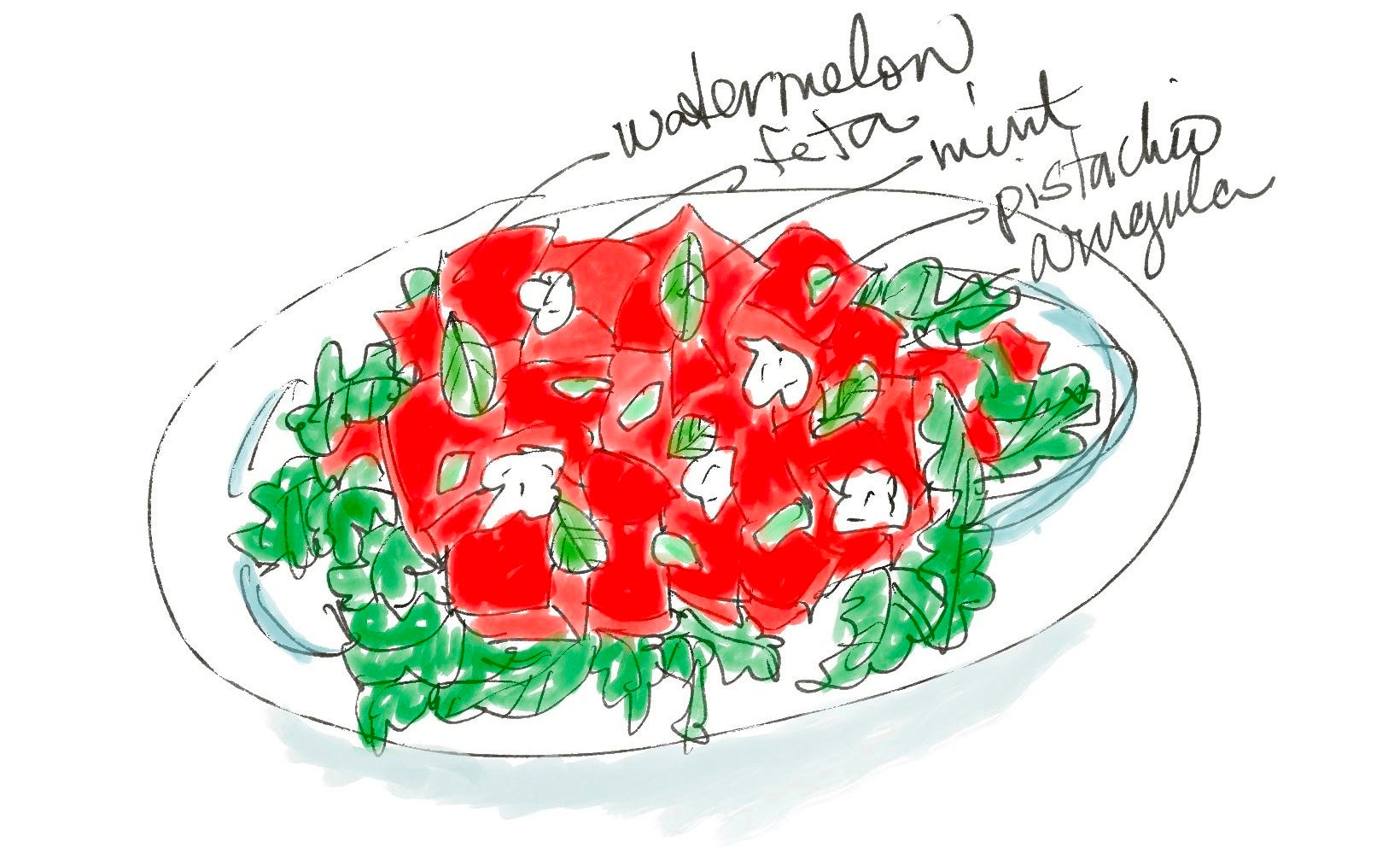
To make your cold, juicy, crunchy, tangy watermelon salad, you’ll find that the hardest part is picking a good melon, then carting it into your house and heaving onto the counter.

Melon 101: Procuring your melons
To pick a good melon, check the spot where the melon rested on the ground. As melons sit in the field, the bottom part that’s in contact with the ground turns yellow. You want a yellow belly. A white belly, or no belly, means it’s not ripe yet. However, if it’s dark yellow, it’s overripe. And if you press on a melon and it has mushy places, it’s overripe. No bueno.
Also check the skin of your melon. As watermelons mature, their rinds develop a dull matte coating that actually preserves the water content within the melon. So rather than select the bright green shiny melon, go for the darker dull one. Also look for dry brown spots on the skin. These are known as “russeting.” And areas that look more web-like are called “webbing.” Larger areas of webbing typically mean you have a sweeter watermelon.
Since watermelons are 92% water, the heavier your melon, the juicier it will be. A watermelon that is lighter may indicate that is is overripe and has started to dry out. Then there’s the slap test. If you slap it gently and it sounds hollow, chances are it’s ripe. And finally, a round watermelon tends to be sweeter and less watery than the traditional large oval type.
Share the Love! Let a friend know about How We Love Food.